An observation: AI tools expose deep organizational problems

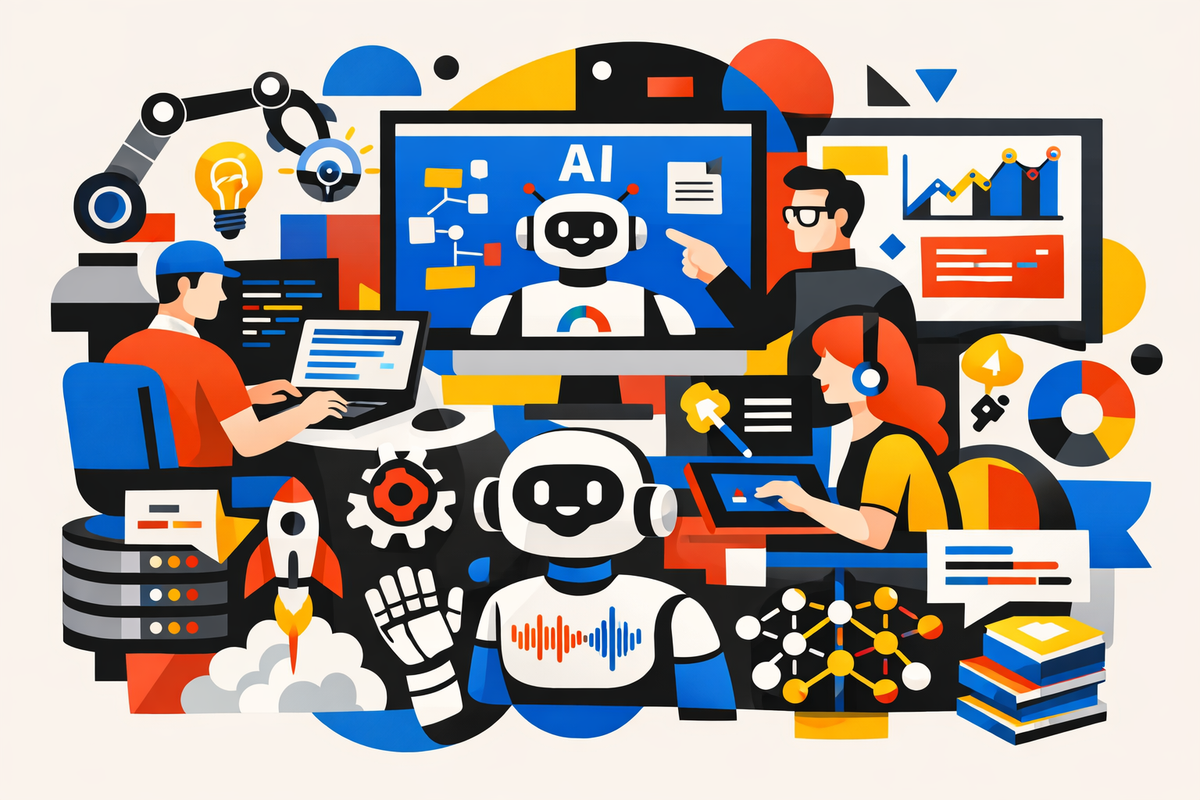
With the spread of AI tools across organizations building software, I wanted to compile and share some of my observations so far.
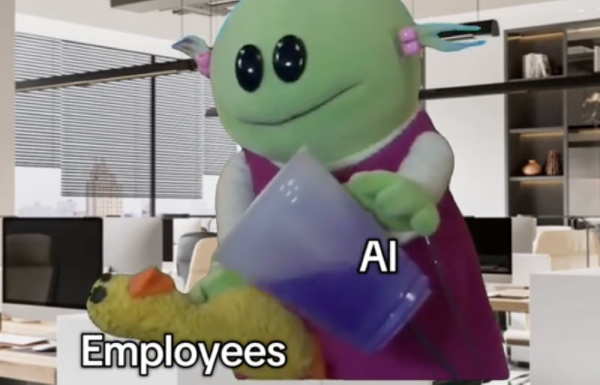
First of all, I personally don't believe that AI is the root cause. It truly is an accelerant. But there is a need to uncover the challenges that come along with using these tools in a team environment and whether it's affecting the organization as a whole when it comes to efficiency and productivity. For example, personally, as an individual contributor, I can confidently say that using Cursor to quickly build working prototypes for early testing and validation has improved my workflow - speed and quality. We're talking minutes compared to days or weeks. But we have to consider the bigger picture and how this newfound efficiency for me fits into a broader team dynamic.
If the team doesn't adjust the way they work as well, can you really say there is efficiency happening at all? How do you measure that?
Organizationally, the real issues that become exposed seem to stem from:
- Lack of clear ownership frameworks
- Misaligned incentives
- Leadership uncertainty about the future
When leadership is uncertain, the teams certainly feel it.
AI is collapsing role boundaries
Traditionally, product teams had fairly clear separations and accountability: The product manager decided what to build, the designer decided how it should work, and the engineer decided how to build it.
With AI tools this blurs everything - PMs can generate wireframes and user flows, engineers can generate prototypes and designers can generate code-ready components. This results in capability overlap.
That's all fine and expected, the real issue is when organizations haven’t redefined responsibility structures yet. This creates ambiguity:
- Who owns the experience?
- Who approves decisions?
- Who is accountable if something fails?
When these aren't redefined and when accountability is unclear, people naturally move toward self-preservation behaviors.
Survival mode changes social dynamics
I learned that when people feel uncertain about their value or job security, three predictable cultural shifts happen.
Defensive Ownership
People start protecting their territory:
- PMs start designing
- Engineers challenge design decisions more aggressively or skip design altogether as it's looked at as a "bottleneck"
- Designers try to control product thinking
This is not because they want to — but because they feel they must prove their relevance in an uncertain environment.
Individual optimization over team optimization
Instead of:
“How do we build the best product?”
The underlying question becomes:
“How do I prove I’m indispensable?”
In this scenario, you’ll see things like work being done in silos, less early collaboration, surprise decisions, and credit-seeking behavior.
Erosion of trust
Trust declines when roles are unclear, decisions feel political and people are evaluated individually, but work collectively.
This can lead to the feeling of “Everyone is for themselves". The systems thinker in me doesn't believe this is intentional, malicious behavior, but more so the by-product of a broader system thats producing defensive reactions.
The best teams are intentionally moving towards a different working model
Healthy, self-aware organizations are starting to shift towards capability overlap with clear accountability. Everyone contributes, but one role owns the final call. At a minimum, without that clarity, teams drift into decision chaos. It needs to be clear who owns the strategy, who owns the user experience, and who owns the technical architecture.
Healthy teams typically show high transparency, early collaboration and shared wins. Stressed teams show late-stage involvement, defensive communication, and political positioning.
Designers are in a particularly strange position right now
Design sits in the middle of two forces where AI democratizes design output such as wireframes, UI mockups and prototypes. However, I believe that design thinking is still scarce - systems thinking, problem framing, effective user testing and validation, human-centered tradeoffs, experience coherence, etc. are all still very necessary and will be even more important in the future.
The value of designers is shifting from artifact creation to systems thinking. This is a good thing. Ironically, many organizations haven't realized this yet due to various reasons such as a narrow understanding of how design contributes to building user-centered products.
The designers who will thrive will evolve into something more like an experience strategist. Less around producing screens and more around properly framing problems, orchestrating collaboration, ensuring product coherence, and tying user needs with business goals. The play is to protect the quality of the system, ensuring that the product makes sense, decisions are intentional and the experience is coherent.
All these things sound familiar don't they? None of this is new, I just believe they will be more important now more than ever.
What are your experiences so far? I'd love to hear them.
I'll write more of my observations on this topic as the inspiration hits. But until then, take care out there ✌️.